How to Use ABC Analysis to Streamline Shopify Inventory Management

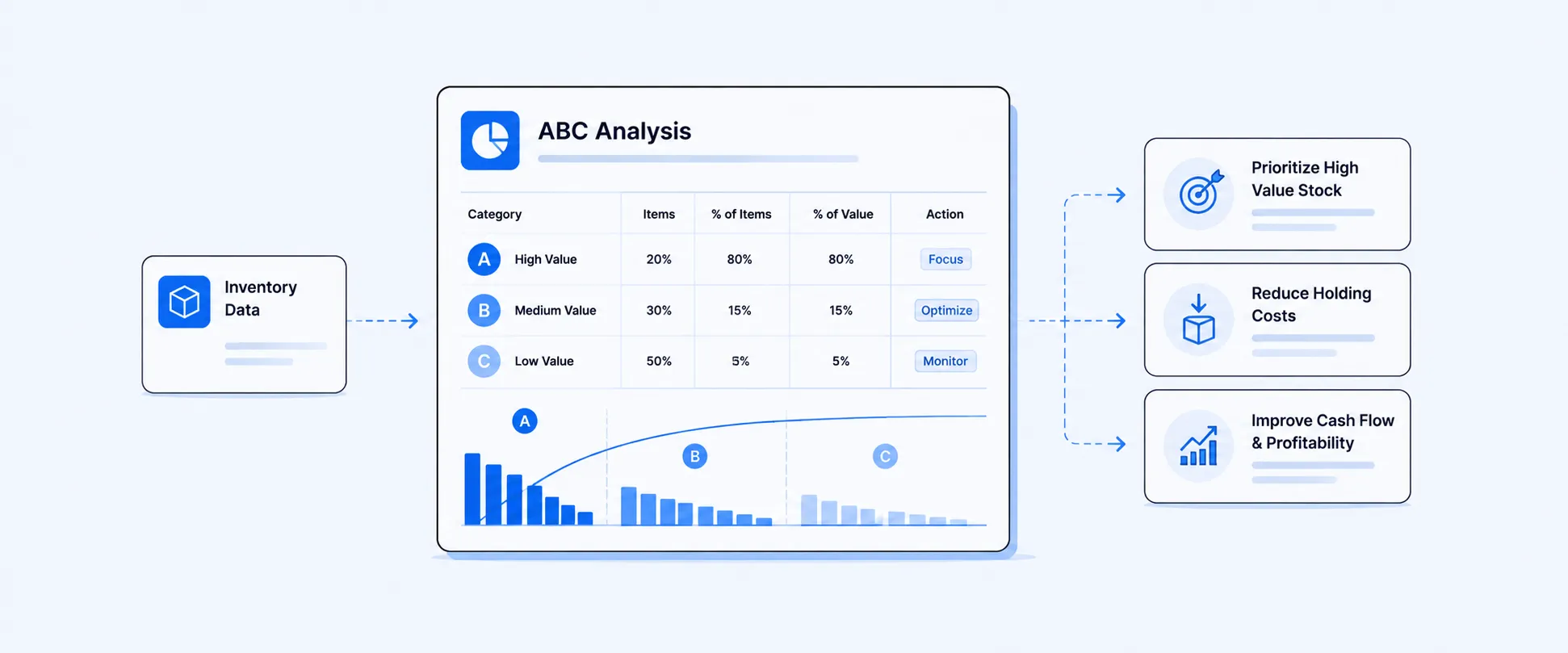
Many merchants deal with too many products but not enough clarity. Some items drive most of the revenue, while others sit in storage and quietly drain cash. This is where ABC analysis becomes useful. ABC analysis helps you categorize products by importance. But the real benefit does not come from the report itself. It comes from how you use it to make better decisions.
Instead of spreading attention across your entire catalog, ABC analysis helps you focus on the small group of products that have the biggest impact on revenue, efficiency, and cash flow.
This analysis helps Shopify merchants categorize their inventory into three groups, A, B, and C, based on product value and demand. Typically, a small portion of products, around 15 percent in the A category, generates a significant share of sales, often close to 70 percent. The B category contributes a moderate share, typically around 20 percent, while the C category contributes only a minimal share, usually under 10 percent.
What to do after identifying A, B, and C products
This is where ABC analysis becomes powerful. Once you know which products fall into each category, the next step is taking action. Merchants looking to explore different reporting solutions can also review this list of the best inventory reporting apps for Shopify in 2026 to understand available options and features.
Managing A products
Your A products need constant attention because they drive most of your revenue. Make sure these products are always in stock. Stockouts here directly impact sales. Prioritize them in purchase orders and replenishment planning.
Even a small disruption in A products, such as stockouts or delays, can have a direct impact on overall sales and customer satisfaction.
If you sell across multiple locations, distribute these products where demand is highest. Keep a close eye on their sales and inventory levels so you can react quickly to changes.
Optimizing B products
B products are your opportunity zone. They already perform, but they can do better.
Improve their visibility by featuring them in collections, promotions, or ads. Experiment with pricing strategies to increase conversions.
You can also bundle B products with A products to boost their sales. Track their performance over time and aim to move more of them into the A category.
Handling C products
C products need a different approach. Holding on to them for too long can hurt your cash flow.
Reduce or stop reordering these items. Run discounts or clearance campaigns to move them faster.
You can bundle them with better-performing products or consider discontinuing them if they do not improve.
How ABC analysis helps streamline inventory management
When used correctly, ABC analysis simplifies how you manage inventory. It helps you focus on the products that matter most instead of spreading attention across everything. You can allocate inventory more effectively by placing high-demand products in the right locations.
It also reduces decision fatigue by narrowing your focus to the most impactful products instead of evaluating every SKU equally. Instead of treating all products equally, it allows you to prioritize based on impact.
- Focus on high revenue-generating products
- Allocate inventory based on demand
- Identify and reduce dead stock
- Improve overall inventory efficiency
- Increase inventory turnover
To take this a step further, custom reporting helps connect ABC categories with real-time inventory data, sales trends, and stock availability.
Turning ABC Analysis into Action with Custom Reporting
Shopify does provide a built-in ABC analysis by product report for merchants on higher plans, with the flexibility to adjust date ranges. However, this report is often used as a static snapshot rather than a decision-making tool. The real challenge lies in bridging the gap between viewing the report and actually managing inventory based on it.
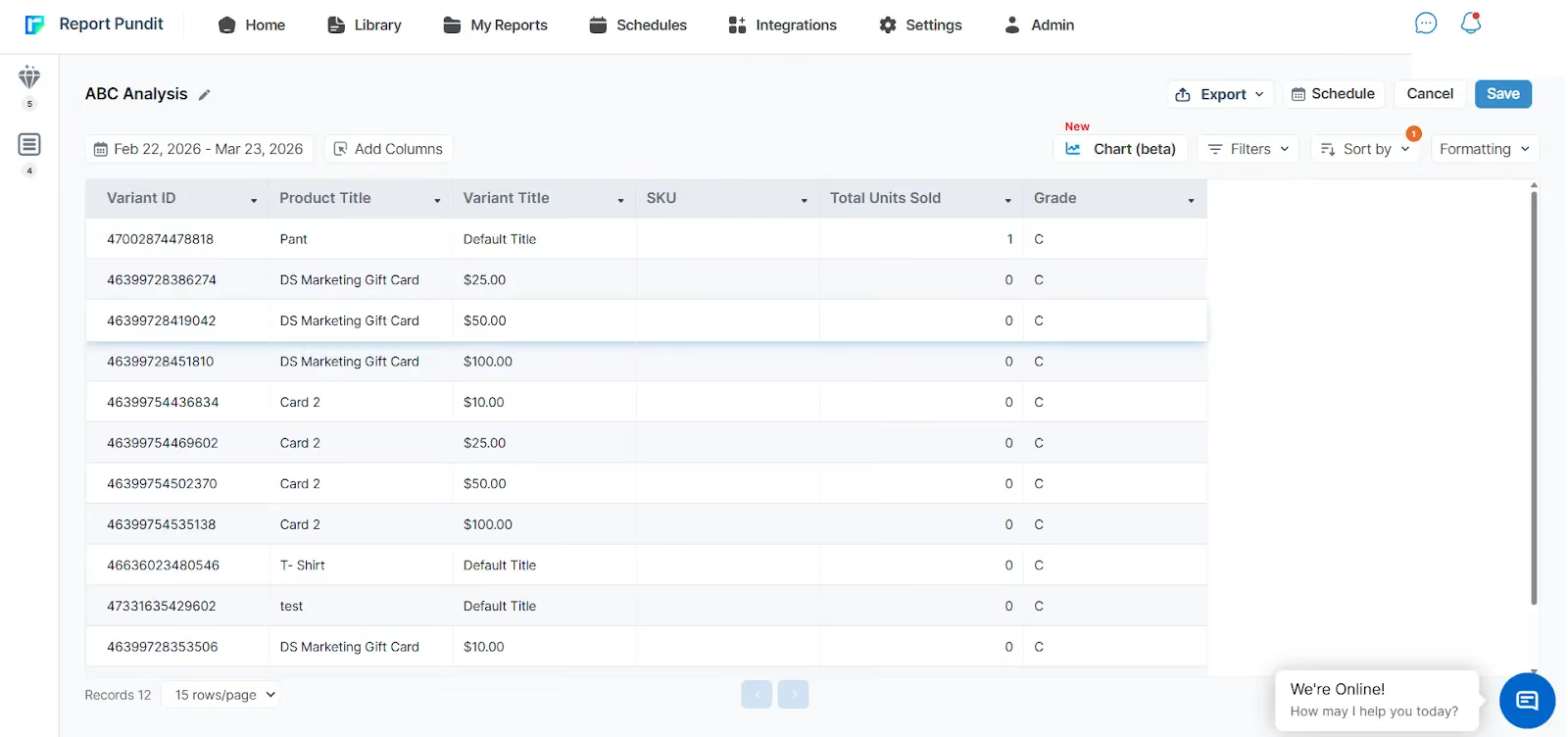
This is where advanced reporting tools become essential. The ABC Analysis report in Report Pundit combines ABC categorization with real-time inventory data, stockout insights, and sales velocity, helping merchants move beyond static reports and make more informed, dynamic inventory decisions. This gives merchants the flexibility to evaluate performance based on specific time periods rather than fixed reports. This improves accuracy by helping you focus on the products that matter most instead of reviewing every SKU equally.
This allows merchants to move from static reports to dynamic decision-making, where inventory actions are based on current performance rather than past snapshots. This flexibility helps merchants adapt to seasonal trends, promotional periods, and sudden demand shifts more effectively.
Over time, this approach ensures that high-value products are consistently aligned with demand, reduces unnecessary effort, and helps avoid unexpected inventory issues.
Common mistakes merchants make with ABC analysis
One common mistake is treating ABC analysis as a one-time activity. Product performance changes over time, so categories should be updated regularly. And a common issue is treating all A products the same, even though some may have different margins, demand patterns, or replenishment cycles.
Another mistake is ignoring B products. Many merchants focus only on A products and overlook the growth potential in B items.
These mistakes can reduce its effectiveness and lead to poor decisions.
- Not updating product categories regularly
- Ignoring growth potential in B products
- Focusing only on sales without considering inventory value
- Not linking ABC insights with inventory actions
How to combine ABC analysis with Shopify inventory data
ABC analysis helps you prioritize products, but it does not reflect real-time inventory conditions on its own. Without current data, you may risk making decisions based on outdated performance, which can lead to overstocking or missed opportunities.
To make it actionable, it needs to be aligned with live inventory data from your store. When you layer operational data on top of ABC categories, you move from simple classification to precise inventory control.
- Map A, B, and C categories with current stock status using the ABC Analysis report to identify which high-priority items need immediate replenishment
- Compare category performance with sales velocity to understand whether demand is increasing or slowing down
- Evaluate inventory value within each category to balance profitability with capital investment
- Use location-based inventory data to ensure top-performing products are placed where they sell best
FAQs
What is ABC analysis in Shopify inventory
ABC analysis is a method for categorizing products by their contribution to revenue or sales, helping merchants prioritize inventory decisions.
How often should I update ABC categories?
It is best to update ABC categories regularly, such as monthly or quarterly, depending on how frequently your sales patterns change.
Should ABC analysis be based on revenue or units sold
It can be based on either, but revenue is more commonly used because it reflects the financial impact of each product.
How are products grouped under ABC categories?
Products are ranked by performance and then grouped into A, B, and C categories based on their contribution to total sales.
Can ABC analysis help reduce overstocking?
Yes, it helps identify slow-moving products so you can reduce excess inventory and avoid tying up cash.
Is ABC analysis useful for growing Shopify stores?
Yes, it is especially useful for growing stores because it helps focus on high-impact products and improves inventory efficiency.
Conclusion
ABC analysis gives you a clear way to focus on what truly drives your business, but its real value comes from how you use it. Simply categorizing products is not enough. The impact comes when you align those categories with stock decisions, sales trends, and inventory value.
When used correctly, ABC analysis helps you prioritize high-performing products, reduce excess inventory, and make better use of your capital. It brings structure to your inventory strategy and helps you to make informed inventory decisions.
By turning insights into action, you can improve efficiency, maintain better stock control, and build a more profitable and scalable Shopify store.

5.0 ( 2000+ Reviews)
